What It Really Takes to Run a Bar at an Event
When guests walk up to a beautifully styled bar at a wedding or party, they usually see just a few things: a bartender, a bar setup, and drinks being served.
What they don’t see is the hours of preparation, planning, and equipment required behind the scenes to make that bar run smoothly.
At Soirée Society, running an event bar involves far more than simply pouring drinks. There’s a full bar program that has to be designed, organized, transported, and executed.
If you're planning an event, you can absolutely run your own bar but understanding what goes into it will help you decide whether it's something you want to handle yourself.
Let’s break it down.
Step 1: Designing the Drink Menu
The first step is deciding what drinks your guests will actually be served.
Most event bars include a mix of:
• beer
• wine
• simple mixed drinks
• 1–3 signature cocktails
But creating a menu isn't just about picking your favorite drinks. You also have to consider:
• guest preferences
• drink preparation time
• ingredient availability
• bar flow and speed of service
For example, a mojito bar sounds fun until you realize each drink requires muddling mint, fresh lime, and multiple ingredients during a busy rush.
That’s why many event bars simplify cocktails into efficient, high-quality recipes that can be served quickly without sacrificing presentation.
Step 2: Calculating Alcohol Quantities
One of the biggest challenges for hosts is figuring out how much alcohol to buy.
For most events, you’ll need to calculate:
• bottles of liquor
• cases of beer
• bottles of wine
• mixers and juices
• garnish ingredients
You also need to estimate consumption based on:
• number of guests
• event length
• drinking habits of the crowd
Buying too little can cause the bar to run dry. Buying too much can leave you with hundreds of dollars in leftover alcohol.
Professional bar services usually create custom shopping lists to help hosts purchase the right quantities.
Step 3: Gathering the Right Bar Tools
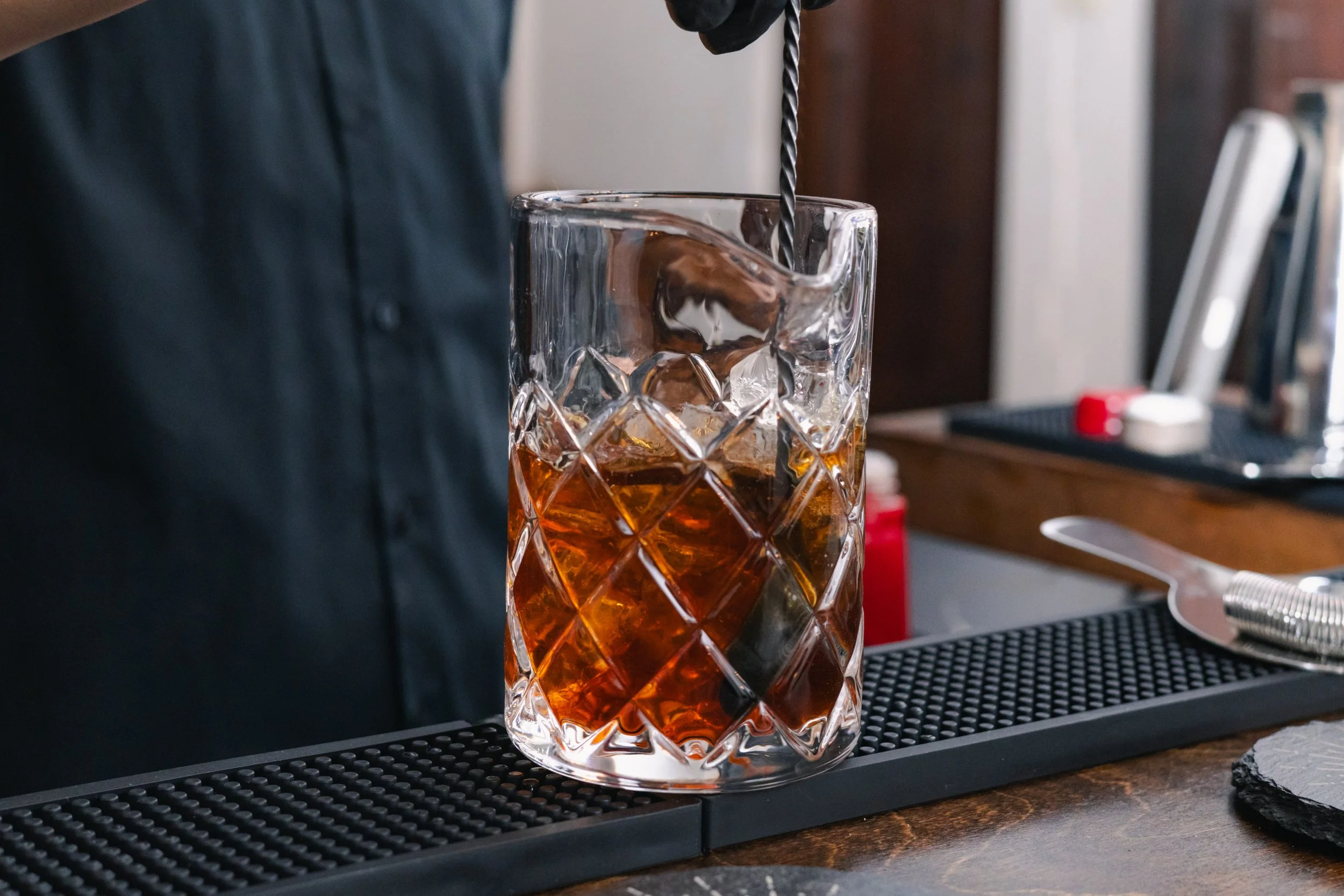
Mixing glass and bar spoon to make an Old Fashioned
A functional bar requires a surprising amount of equipment.
Professional bartenders typically bring tools like:
• cocktail shakers
• jiggers (measuring tools)
• Pour Spouts
• bar spoons
• muddlers
• bottle openers and wine keys
• strainers
• cutting boards and knives
Without the right tools, even simple drinks become difficult to make efficiently.
Imagine trying to make margaritas for 80 guests without a jigger or shaker, it quickly becomes chaotic or drinks just start tasting un-balanced.
Step 4: Bar Infrastructure and Setup
Beyond the tools, you also need the physical bar setup.
This usually includes:
• a bar counter or bar cart
• prep space for garnishes
• back bar tables
• coolers for beer and mixers
• ice bins and scoops
• trash bins and liquid dump buckets
• menu signage
For outdoor events or venues without bar infrastructure, the host must supply everything.
This is where mobile bar services often become extremely helpful, because they bring complete bar setups designed for events.
Step 5: Ice, Garnishes, and Mixers
One of the most overlooked aspects of event bars is prep work.
Before guests even arrive, bartenders are often preparing:
• cut citrus (limes, lemons, oranges)
• juicing
• garnishes
• cocktail syrups
• batching ingredients
• chilling beverages
• testing recipes
Ice is another huge factor.
A typical event can require 75–250 pounds of ice depending on guest count, drink menu and even weather forecast
Without enough ice, drinks warm quickly and service slows down.
Step 6: Staffing and Service Flow
Running a bar during an event is fast-paced.
There are often moments when dozens of guests approach the bar at the same time.
Professional bartenders are trained to:
• keep drink service fast
• maintain cleanliness and organization
• manage alcohol responsibly
• prevent long lines
For larger events, barbacks or additional bartenders help restock supplies, clear glassware, and keep the bar running efficiently.
Can You Run Your Own Event Bar?
Absolutely.
Many hosts choose to run their own bar by purchasing alcohol, setting up coolers, and asking friends or family members to serve drinks.
For smaller gatherings, this can work perfectly.
However, as guest counts grow, the logistics become much more complex.
Hosts often find themselves worrying about:
• drink lines
• running out of alcohol
• cleaning up glassware
• organizing supplies
• managing service while trying to enjoy their own event
Why Many Hosts Choose Professional Bar Services
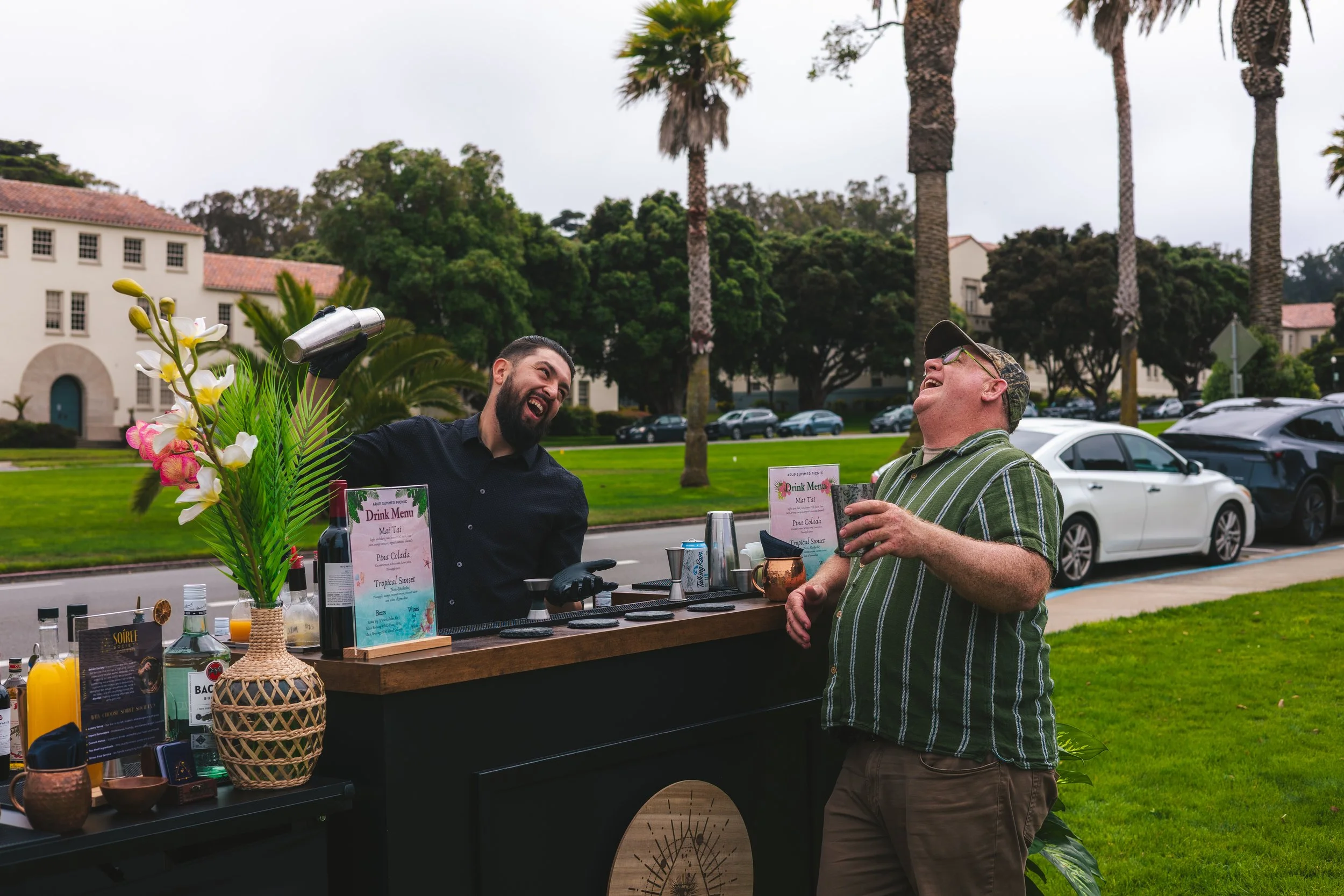
Corporate party with the bar cart ready to entertain guest and serve drinks
Hiring a mobile bar service removes much of that stress.
Instead of managing the bar yourself, professionals handle:
• drink menu planning
• bar setup and equipment
• bartending staff
• cocktail preparation
• service flow and organization
At Soirée Society, we specialize in dry hire mobile bar services, which means clients provide the alcohol while we bring everything else needed to run the bar smoothly.
This approach gives hosts flexibility on alcohol brands and budget, while still enjoying a fully professional bar experience.
Let’s Plan Your Event Bar
Whether you're planning a wedding, birthday, or corporate gathering, a well-run bar can make a huge difference in the guest experience.
If you're looking for professional bartenders and a beautifully styled mobile bar setup in the Bay Area, we'd love to help.
Request a quote today and start planning your event bar with Soirée Society.